"At the time of the narrative, Schehrazada saw the approach of morning, and was discreetly silent." (The Thousand and One Nights)
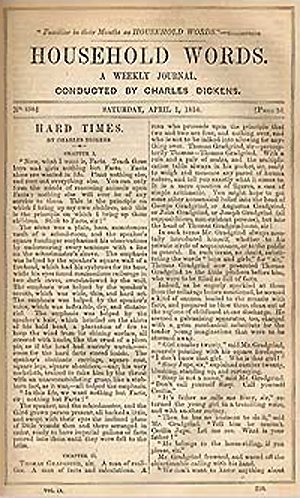
Charlie Stross reminds us in an article over the length of the novels how fictional media and public distribution and alter the narrative report. Commenting few moments illustrating the Anglo edition since the industrial revolution, rescues the known practice of Victorian serials, in which they were distributed serially (each chapter), novels whose length could range widely across plans author, publisher and reader interest groups. Since then, each chapter seemed limited by the need for printed in space for each of the fascicles for subsequent binding. In the first half of the twentieth century, says that Stross's science fiction novel , distributed periodicals, allowed the insertion of short stories and serialized novels also were either not very long (60,000 words) for not removing value to the remaining content of the magazine if the novel was not much in a number of readers, and this alone would stop buying it. And offered several short stories over a season. This genre came in the 70-80 at department stores, coinciding with a season that should get the prices: to justify it to the buyer, should be offered free, simple, fatter, and thus increased the number of pages, not just playing with the font size but growing in content. The arrival at 90 assumed the reader would expect to buy novels rather long. Many of them had to be divided into different volumes, as binding reasons, but mainly in price (the limit was confirmed at $ 24) made a certain number of books prepared by Stross at the beginning of our century had to be redesigned units of 300 pages each, when he had thought in blocks of about 800 pages. No doubt the unit that the project could not remain intact, since it was aware of the need to entertain the reader and provide the appropriate climax in the middle of each unit and by the end of each of the books individually edited.

This leads me to write today about how fiction, and specifically the novel, has been transmitted in a more fragmented than we are often aware of, and how order seems more appropriate rhetorical for digital media in a kind of fragmentation of content, offers and a twist to the past to give us a serialized access to many of the fictions of the past and present.
I have commented elsewhere handwritten editorial techniques of medieval Compilatio copies pecia to the Modern Age that allowed you to create books or anthologies from a selection of other materials, aimed not only to study but also to entertainment, reading a sort of fragmented and interconnected by the intention of the anthologist. We remember the wise Chartier the birth of loose statement in the Renaissance, which will evolve with the literature of string to the gruesome stories of the century, the movement begins with many romances in a single sheet for distribution popular: these romances were fragments of medieval epic episodes of larger fragments of a larger story shared by the collective culture. The oral distribution of printed material was eminently much fragmentary: reading aloud group of chapters and episodes of famous novels was also a regular activity in the Renaissance and Baroque, and even a form of socialization, for example, between nobles, to create their literary circles. Hence we reach the nineteenth century academies and gatherings, where were discussed and read excerpts from his own works.
fragmentation has encouraged our reading hypertext and publishing initiatives serial for a certain length narratives such as novels. Comment on two of them, similar bill. The first holds Jack Lemoine, who as a reader seems to share with others some works of the tradition. His blog Literature Daily offers daily a fragment of a classical work differently depending on the day of the week, so that different stories simultaneously published seven Twain-from Homer, from Kipling to Baum, through the Thousand and One Nights . They are all public domain texts and issues he neatly segmented, so that we receive in our mail or read directly from the blog every episode. Furthermore, she added Through service-odiogo.com - the option of listening to the piece, if it is a machine who reads it. Thanks to the labels of the menu, you can retrieve fragments of a previously published titles. Since then, the fragmentation is imposed by the editor itself, considering that a few paragraphs are sufficient in each issue, their expertise should be the sectioning also with a sense of reading for breaking events at appropriate times, and no doubt this creates small unexpected climax ever.

The other serial reading service is commercial, but offers some free readings and a full service. It takes a while already under way, is called Dailylit and can follow the book you want from the beginning, received via rss or email. The fragments are a little longer, they calculate that the equivalent of about five minutes of reading, and reading can be distributed daily, three days a week, or only on days of work. It is ironic that do not include the weekend, so relate - ay, Anglo-Saxon! - Reading our daily routine of professional obligations (or perhaps as the calculated break necessary to complete that day's work.) The truth is that after a day you can also specify where you want receive and the size-three-day fragment. You can also select the time you wish to receive a reading, and the possibility Manual request more than one piece at once, if by chance we want to continue with the story immediately.
The integration of this form of reading serial 2.0 in our environment it does seem interesting, however simple it may seem the idea as it allows us to start the series when we want, opposite the Victorian serial mass-handed treatment information packet which is considered the text. Traditional capitulation here comes redesigned for the new medium and its relationship with the reader, the reader who is a reception of serial tailored to your interests and location, in a very flexible. If the fragments are edited with a narrative tact, looking for those little moments in which ends a passage or situation, the perceived intensity of a new conversation, in which a revelation, no matter how small, is in air, then fragmentation will acquire a new meaning and the reading will be successful. At the same time, the length of a novel is not so worrying if the reading is slowly but enjoying the intensity in each of its fragments, and his step-like network of small suggestions unraveling before his eyes, fragments draw us toward the total of the novel.
course, for many to take a book (electronic or otherwise) and open or close when you like is less complicated, but think also in the interest of the reading series, leaving some time between a moment of reading and following ruminating in the meantime the situation left the words, reworking the text consciously or unconsciously while waiting in the next post, the solution offered by the author.

This strikes me as editing considering the effect Scheherazade, when she does enshrine a thousand and one nights stories half finished and left to develop for the next night, getting that the Sultan did not fulfill his promise to kill her after spending the first night with her, and finding him, finally, a voracious reader, consuming different stories piece by piece, regardless of the length of the same, but attentive to his climax . Literature to the rescue of life. And to the rescue of stories continued. It is curious to note that these Arabian Nights, of medieval origin (a large Compilatio various fictional material from the East) are only discovered and edited with additions come in the eighteenth century Europe, through a translation -French reprocessing, in twelve volumes, but do not reach popularity until the nineteenth century, time of great brochures and lecture series.
Therefore, it occurs to me that, given the critical fragmentation in hiperlectura , on the one hand we must remember that almost never works read in one sitting, and between reading and reading many different things happen in our daily lives -, and secondly, that this fragmentation helps us better to stop in one paragraph, the ability to read with more attention and see the concentration of meaning in the proposed statement, meditate, or Rumi, as was done by ruminatio text in medieval-extracted in intensity. This will only depend on the pace of reading, today, probably unconscious incompetence and greed by reading to a new and fascinating medium, makes us jump from one place to another, which is not bad, but it is instead what we spit up, devouring fragments without ruminate just a few seconds, (with) fusing the navigation tempo with our reading.
Stross brings to its electronic book and distribution as well the possibility of rising again a revival of the novels in series, on the other hand, the possibility of selling novels of mammoth proportions to form a unity, since the production cost would be very similar because the economic weight of the electronic file is not equivalent to weight, with cost of binding and printing, the printed book. In fact, some readers of Stross leave this in the comments to his article that read any of his novels in electronic form without really knowing the true extent of the novel, but that did not care. Serial reading, as exploited by the Dickensian era of industrialization, could be switched to the 2.0 of the information society in a reading of the text whose treatment as narrative information packages could be the start of a fragmented sense, and step by step , connected in many ways and weaving a network of increasingly complex readings but no less conscious or deep or concentrated.
Scheherazade effect, with its fragmented chain of short stories, always ending and always continue, define and save your character in front of the Sultan Shahriar fiction: a traditional fiction best is saved once again and solely by his predecessors and learning from reinventing itself to perpetuate another metamorphosis.
Indeed, Stross is partly filled his desire and the future come true, as the team of Dailylit thought of a sci-fi anthology which distributes serially. He is not considered a great author, but view seems to know his business and his future.



0 comments:
Post a Comment