Saturday, June 26, 2010

Canned Green Beans Spark In Microwave

libroides Came! Or the techno-digital Prometheus Research

"If I do not inspire love, I will inspire fear."
(Frankenstein, or The Modern Prometheus)

The June 25, 2010 landing in the English market's first magazine 3.0 (!?), in the background is Book a physical mixture + audiovisual electronic device. It seems that the cover * Includes on-screen video which can be contained and even space left to store video and incorporate itself. It is a traditional magazine with a cover animated visual, something like a TV embedded in a cover, without further interaction with the viewer.


What interests me now, from an anthropological point of the book as history of multimedia technology, is that the combination of media in this case creates a hybrid which, but for the primitive sound cards, books, yet we are not used, like the androids in which we're slowly becoming a force to overlap, and introduce the technology in our body, and not so much as thought of science fiction, creating anthropomorphic robots - we were not to want to read and inform us through the corresponding libroide-that the robot would bibliomorfo.


Despite the image of android robot of the future as bequeathed to us by science fiction, perhaps the monster created by Dr. Frankenstein still the most powerful this icon collective desire to give life to a set of previously inert elements, converted into machine mixing strength and scientific genius. Probably because the doctor does return to a human body-patch for several other other-the inert silence to the world of the living, where the monster struggles to live and feel full. This is the chip invisible that breathes as a mirror of a divine breath. Travel from there to the android Roy in Blade Runner, in its final farewell scene , it offers little change in the machine created to be like a man and willing to be fully in the consciousness of a fulfilled life.

The libroide comes, therefore, hand printed paper that is implemented, with some primitive-a multimedia electronic robot, as if to give a new and unexpected life to the old codex. A biblio-Frankenstein, against the model of our century, the tablet Ando, \u200b\u200biPad, which is pure metal robotic book aspiring to be more than book, humanoid in social interaction. Thus, the libroide to infiltrate into our lives and may you enjoy your golden years from now, in which paper and screen, ink and symbiosis can create unexpected bit waiting for one more book smart, "I always thought that only true if the reader is, while it is true that books create smart-intelligent readers, a book also more humanoid, where we reflect on its cover in our aspirations and, indeed, our vanities.


why I want to highlight another example libroide the phonebook that appeared last year in Asia, that only makes life complete by inserting your mobile phone in the center of the body of the printed book, and that teaches us page hit several videos and interactive games ... a child libroide to develop new relationships with small and increasingly digital natives. An interactive gimmick that traps mixed in the physicality and permanence of print, digital virtuality and volatility.


antes Many of these are run by marketing and the goal of a sublimation / provocation / challenge carnival on the cultural tradition by surprise that the hybrid produces publicly opposed celebrated as a new network. In addition to experience while creates a momentary excitement, no doubt open market - and perhaps a genetic monsters circus? - That in times of change, opposition, war, coexistence between supports and media are a reflection of how the old home without fear of robotic human body through (bookish now) on the one hand, and the mystery of what is like ourselves, but fabulous and buildable, on the other, and especially, travels within the social imaginary uncertainty and suspicion about what is not human but it closely resembles, in this case something that is not a book but it seems much, except for one detail: the revelation that turns on and starts move, and our digital face, as in a mirror, comes from the cover of that which we have a pure mechanization that could still control the stroke of page.


Prometheus was first stealing to the gods divine fire and the wisdom to humans, with these radically altered their environment, but Prometheus was punished for it. What will happen to the libroides? Will they create a new hybrid species difficult to accept, bookish talking about? Do we invade suspicious and unrecognizable forms? Have we changed already lectoides? What other aspiring libroides libroides or are already present but invisible? Can you think of new ones, now that we opened the science fiction book?


Meanwhile, as Deckard and Rachael ginoide at the end of Blade Runner , couple, man and machine in perfect bibliodistopía travel into an unknown future and unknown end.

A Cute And Simple Text To Text A Guy

Fourth

"I hope you never see an anger me," says Esther "first sentence of a grungy paper that has accompanied me for a month, which is what I've been trying to regain the blog. I HAVE NO TIME FOR ANYTHING.

"Architecture does not generate city": Esther, an architect, is releasing these maxims, and when he realizes that I'm aiming gets angry. Then adds, writers like after we put great. I guess he was referring to architecture artistic when he said that it does not generate city, according to its hue: "Well, the Pompidou yes:


want to go see Sanchinarro, New Carabanchel and the Enlargement of Vallecas. "But it notes, is" he tells me twenty times. I say yes, but I have to aim.


According to Esther, from the 70's planning does not exist in Spain, and an example of this are the districts mentioned. Gallardón City Council is backing a signature architecture that does not create the urban fabric, ie, spaces that allow relationships, for which needs to be built to human scale, small streets designed for pedestrians and not cars; ; buildings of four or five floors, plazas. Esther says that the definition of the city is on how to solve the road section (ie the ratio between the road and sidewalk, which define the public space, and the building, which is the private space), and when they are raised moles avenues flanked by two lanes, with their areas of hedges and garages, all that is favorable to get home in our stroller to leave in our parking lot and up the elevator to the home: absolute primacy of the private space. Here there is no city, but urbanization. Intengramos with whom you only earn the same money than you, and that if the building has a pool and garden. In the city however, the housing does not matter, because everything is depending on what you can do on the street.


Add scrotumtightening Esther Madrid is the scale (human). For the amount of paseable street with shops, bars, trees, plazas and cars honking because pedestrians do not pass and the roads are not designed for vehicles.


Benedetta is also an architect, and has come to Madrid with Esther for a few days. We decided to go to the House, formerly part of all the guided tours of the city, and has been off the beaten path. The cable car is not that new to catetillos, the depressed and the city zoo has become very interesting and does not let you. From above we see a colony of Florida as part of my future visits, according to Esther, and by the House resolve to walk again, with the buzz of the attractions and shouts back, tropical birds must have escaped from cages, the cicadas, foreign transits a landscape of wooded pasture to another, hence the moor and then gardens (I've always walked in the opposite direction, crossing a road riddled with trenches that I no longer go, and following some of the roads where you put the hookers). Hundreds of Latinos ate and drank and screamed in an esplanade, or perhaps were football fields. One good thing that has made the Town Hall is to bury the M-30, which functions as a wall. Dear Gallardón, freaked when I leave the House to Prince Pio.

leave there a few pictures of the visit of Esther and Betta:


Country House Amusement Park in the background.


The funicular.


The colony in the area of \u200b\u200bFlorida for future research.


Esther and Betta, beautiful.


I so happy that I suck.

Tuesday, June 15, 2010

Read Pro Duo Card In Laptop


(Photo: Ian Muttoo )


Dear dean of faculty:

I am writing to express the need for change in the way that researchers want to develop our research and the way we want to publicly share our knowledge, especially in the humanities.

To begin, we refuse to write books as you understand them and the university has requested it so far. With current tools available (and the book is one of them, I know) can not afford to publish books to use, those that are printed two years after it was written and reviewed. The reality is that these books are old as we deliver, because researchers are dedicated to investigate, and a week later we have new materials and nuances that add to the book, which becomes impractical when in print. The book has always been a stage of knowledge within a research line, a particular time, but to some random point, our own state investigator. Therefore we refuse to write more books, or milestones of paper and ink. You no longer need to restrict ourselves to these terms in a society where information flow has reached a much larger, and in which researchers are able to manage it better.

Therefore, we ask a very different technological infrastructure for the university and department publications. Typically, researchers carry out two or three lines of research. In these lines of analysis developed in small groups around specific issues, while we are used to delineate the general framework in which we stand and where we locate the research of other colleagues. That is, the university must approve only those lines of research giving us a space to develop appropriate technology and expose each. We always work with projects that expand and generate new continuously. Therefore, we need a space in a dynamic show not only the results (is there any one definitive result time?) but our research process, with capacity to share with our audience (colleagues, students, stakeholders) in a continuous and interactive. This implies that all the current 2.0 technology, using the most advanced wiki, blog, multimedia and social networking should be available to us to keep alive and open our lines of investigation, in which the researcher can decide when to publish a result as he conceives it, and where the projects are fed back to the interaction of other specialists and why not, other audiences not necessarily academic.

often discover new material each week, and these new materials is part of a puzzle that's in my head and I built, piece by piece. Should have the opportunity to incorporate public immediately and this piece to the puzzle of my online research, so that reading can be answered at any time. And to do the same with other colleagues or stakeholders. The researchers did not investigate for ourselves, although it can be a pleasure to do, but we do also to provide insight (and disclosure) within a vast network of common knowledge which we conceive the world, a collective repository now called network of networks. Knowledge is understood and accepted more than ever as participation in the imago mundi, and how to participate in it is based on the flow of communication of our ideas, discoveries, trial and error.

my book does not matter that grows daily, it changes every week, we all learn something every day and therefore the world does not stand still for anyone. As a researcher, not fear of contradiction, to go back one day, to advance another, often because the contradiction has led me to where I am.

Thus, researchers would get many benefits, not only fluency in the exhibition, provision and communication of ideas, processes, results, but also the creation and membership of a scientific community better connected, and therefore better community. Colleagues may criticize (positively or negatively) and therefore, revise or defend some of the ideas much more effectively and live.

Therefore, we ask for a multimedia and interactive space where we can outline, add, modify, re-retrieve, link, and experience any kind of information, and we can discuss, share and link information themselves and others (do not you means the same from the outside?). We do not want to publish more books, but we want to keep updated and open to our projects possible. Published continuously, because they continually investigate and reflect well our collective activity continued to ask, answer us, interact, question, express, clarify, propose.

want a tool that combines the best of wiki + wordpress + twitter + facebook + google + youtube Prezi + flickr + delicious + + + ustream flowr citeulike + + + rss + dropbox wallwisher sync.in + + + Zotero + pip.io Dipity. Some journalists and other professionals and offer basic packages or, failing that, they organize themselves on personal pages. But in our case, if the university wants to continue to provide knowledge to the society and approved in its universal work, has the responsibility to innovate as well, providing as institution renewed knowledge tools for researchers.

and apologize. I believe that I forgot to list some 2.0 service, but is easily understood why should I use each and all together. Anyway, I can explain it in detail in a separate report, if necessary. Can you think of something else?

Sincerely Yours,

a researcher.

PS. It seems that other voices are coming similar requests.

Saturday, June 5, 2010

Large Word Search Printouts

Capitulating clouds digital media. Length novels and the effect Scheherazade (II)

"At the time of the narrative, Schehrazada saw the approach of morning, and was discreetly silent." (The Thousand and One Nights)

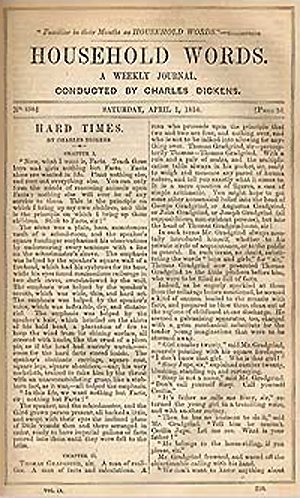
Charlie Stross reminds us in an article over the length of the novels how fictional media and public distribution and alter the narrative report. Commenting few moments illustrating the Anglo edition since the industrial revolution, rescues the known practice of Victorian serials, in which they were distributed serially (each chapter), novels whose length could range widely across plans author, publisher and reader interest groups. Since then, each chapter seemed limited by the need for printed in space for each of the fascicles for subsequent binding. In the first half of the twentieth century, says that Stross's science fiction novel , distributed periodicals, allowed the insertion of short stories and serialized novels also were either not very long (60,000 words) for not removing value to the remaining content of the magazine if the novel was not much in a number of readers, and this alone would stop buying it. And offered several short stories over a season. This genre came in the 70-80 at department stores, coinciding with a season that should get the prices: to justify it to the buyer, should be offered free, simple, fatter, and thus increased the number of pages, not just playing with the font size but growing in content. The arrival at 90 assumed the reader would expect to buy novels rather long. Many of them had to be divided into different volumes, as binding reasons, but mainly in price (the limit was confirmed at $ 24) made a certain number of books prepared by Stross at the beginning of our century had to be redesigned units of 300 pages each, when he had thought in blocks of about 800 pages. No doubt the unit that the project could not remain intact, since it was aware of the need to entertain the reader and provide the appropriate climax in the middle of each unit and by the end of each of the books individually edited.


This leads me to write today about how fiction, and specifically the novel, has been transmitted in a more fragmented than we are often aware of, and how order seems more appropriate rhetorical for digital media in a kind of fragmentation of content, offers and a twist to the past to give us a serialized access to many of the fictions of the past and present.

I have commented elsewhere handwritten editorial techniques of medieval Compilatio copies pecia to the Modern Age that allowed you to create books or anthologies from a selection of other materials, aimed not only to study but also to entertainment, reading a sort of fragmented and interconnected by the intention of the anthologist. We remember the wise Chartier the birth of loose statement in the Renaissance, which will evolve with the literature of string to the gruesome stories of the century, the movement begins with many romances in a single sheet for distribution popular: these romances were fragments of medieval epic episodes of larger fragments of a larger story shared by the collective culture. The oral distribution of printed material was eminently much fragmentary: reading aloud group of chapters and episodes of famous novels was also a regular activity in the Renaissance and Baroque, and even a form of socialization, for example, between nobles, to create their literary circles. Hence we reach the nineteenth century academies and gatherings, where were discussed and read excerpts from his own works.

fragmentation has encouraged our reading hypertext and publishing initiatives serial for a certain length narratives such as novels. Comment on two of them, similar bill. The first holds Jack Lemoine, who as a reader seems to share with others some works of the tradition. His blog Literature Daily offers daily a fragment of a classical work differently depending on the day of the week, so that different stories simultaneously published seven Twain-from Homer, from Kipling to Baum, through the Thousand and One Nights . They are all public domain texts and issues he neatly segmented, so that we receive in our mail or read directly from the blog every episode. Furthermore, she added Through service-odiogo.com - the option of listening to the piece, if it is a machine who reads it. Thanks to the labels of the menu, you can retrieve fragments of a previously published titles. Since then, the fragmentation is imposed by the editor itself, considering that a few paragraphs are sufficient in each issue, their expertise should be the sectioning also with a sense of reading for breaking events at appropriate times, and no doubt this creates small unexpected climax ever.


The other serial reading service is commercial, but offers some free readings and a full service. It takes a while already under way, is called Dailylit and can follow the book you want from the beginning, received via rss or email. The fragments are a little longer, they calculate that the equivalent of about five minutes of reading, and reading can be distributed daily, three days a week, or only on days of work. It is ironic that do not include the weekend, so relate - ay, Anglo-Saxon! - Reading our daily routine of professional obligations (or perhaps as the calculated break necessary to complete that day's work.) The truth is that after a day you can also specify where you want receive and the size-three-day fragment. You can also select the time you wish to receive a reading, and the possibility Manual request more than one piece at once, if by chance we want to continue with the story immediately.

The integration of this form of reading serial 2.0 in our environment it does seem interesting, however simple it may seem the idea as it allows us to start the series when we want, opposite the Victorian serial mass-handed treatment information packet which is considered the text. Traditional capitulation here comes redesigned for the new medium and its relationship with the reader, the reader who is a reception of serial tailored to your interests and location, in a very flexible. If the fragments are edited with a narrative tact, looking for those little moments in which ends a passage or situation, the perceived intensity of a new conversation, in which a revelation, no matter how small, is in air, then fragmentation will acquire a new meaning and the reading will be successful. At the same time, the length of a novel is not so worrying if the reading is slowly but enjoying the intensity in each of its fragments, and his step-like network of small suggestions unraveling before his eyes, fragments draw us toward the total of the novel.

course, for many to take a book (electronic or otherwise) and open or close when you like is less complicated, but think also in the interest of the reading series, leaving some time between a moment of reading and following ruminating in the meantime the situation left the words, reworking the text consciously or unconsciously while waiting in the next post, the solution offered by the author.


This strikes me as editing considering the effect Scheherazade, when she does enshrine a thousand and one nights stories half finished and left to develop for the next night, getting that the Sultan did not fulfill his promise to kill her after spending the first night with her, and finding him, finally, a voracious reader, consuming different stories piece by piece, regardless of the length of the same, but attentive to his climax . Literature to the rescue of life. And to the rescue of stories continued. It is curious to note that these Arabian Nights, of medieval origin (a large Compilatio various fictional material from the East) are only discovered and edited with additions come in the eighteenth century Europe, through a translation -French reprocessing, in twelve volumes, but do not reach popularity until the nineteenth century, time of great brochures and lecture series.

Therefore, it occurs to me that, given the critical fragmentation in hiperlectura , on the one hand we must remember that almost never works read in one sitting, and between reading and reading many different things happen in our daily lives -, and secondly, that this fragmentation helps us better to stop in one paragraph, the ability to read with more attention and see the concentration of meaning in the proposed statement, meditate, or Rumi, as was done by ruminatio text in medieval-extracted in intensity. This will only depend on the pace of reading, today, probably unconscious incompetence and greed by reading to a new and fascinating medium, makes us jump from one place to another, which is not bad, but it is instead what we spit up, devouring fragments without ruminate just a few seconds, (with) fusing the navigation tempo with our reading.

Stross brings to its electronic book and distribution as well the possibility of rising again a revival of the novels in series, on the other hand, the possibility of selling novels of mammoth proportions to form a unity, since the production cost would be very similar because the economic weight of the electronic file is not equivalent to weight, with cost of binding and printing, the printed book. In fact, some readers of Stross leave this in the comments to his article that read any of his novels in electronic form without really knowing the true extent of the novel, but that did not care. Serial reading, as exploited by the Dickensian era of industrialization, could be switched to the 2.0 of the information society in a reading of the text whose treatment as narrative information packages could be the start of a fragmented sense, and step by step , connected in many ways and weaving a network of increasingly complex readings but no less conscious or deep or concentrated.

Scheherazade effect, with its fragmented chain of short stories, always ending and always continue, define and save your character in front of the Sultan Shahriar fiction: a traditional fiction best is saved once again and solely by his predecessors and learning from reinventing itself to perpetuate another metamorphosis.

Indeed, Stross is partly filled his desire and the future come true, as the team of Dailylit thought of a sci-fi anthology which distributes serially. He is not considered a great author, but view seems to know his business and his future.

Wednesday, June 2, 2010

Can I Use Olive Oil To Oil Clippers

Rokha


All are invited to the launch of world language, Paul's Rokha, whip materialist poetic and spring, the most popular Chilean and the great poets of our land.

The stew will be Friday June 11th at 19:00 hrs., In the Board of the National Library Ercilla, and is organized in conjunction with the Archive Writer BN.

The book will be presented by Leonardo Sanhueza, later to hear snippets of text in the booming voice of our friend Jaime Huenún.

maintain our confidence that there will be wine rigor and also not ruled out any surprises during the event.


More information: http://daskapitalediciones.wordpress.com/